Could new states be on the way?
It seems as if wildfires and earthquakes will face unexpected competition in the process of disfiguring California.
Tim Draper, venture capitalist and co-founder of Draper Fisher Jurveston, recently launched a campaign to divide California into six separate states, irrevocably altering the “Fifty Nifty United States”. The California native has commenced the initial steps to have his proposal included on the November 2014 state ballot.
Draper is the alleged culprit behind leaking a draft of the proposal in December, as identified to be authored by a group of venture capitalists. The contents of the
proposal begin by stating the issues leading to their call for action. First, the writers state California’s population of 38 million is six times the national state population average. While this statistic is difficult to interpret due to population dispersion, it’s true that California alone makes up 12
percent of the U.S. population. Additionally, the proposal claims the state’s geographic enormity and its spectrum of diversity from North to South are matters of great consideration. The writers also document that in 1859, a vast majority of the voters were in favor of splitting California into two states. In reaction to disproportionate
taxes favoring the North, Ranchero Don Andres Pico proposed the Pico Act to split the state into two at the 36th parallel. His plan won state Legislative and Executive approval in less than one month, leaving only a need for the national government’s assent. However, the significance of the Pico Act quickly diminished due to the eruption of the Civil War. Thus, the proposal died federally as quickly as it thrived regionally.
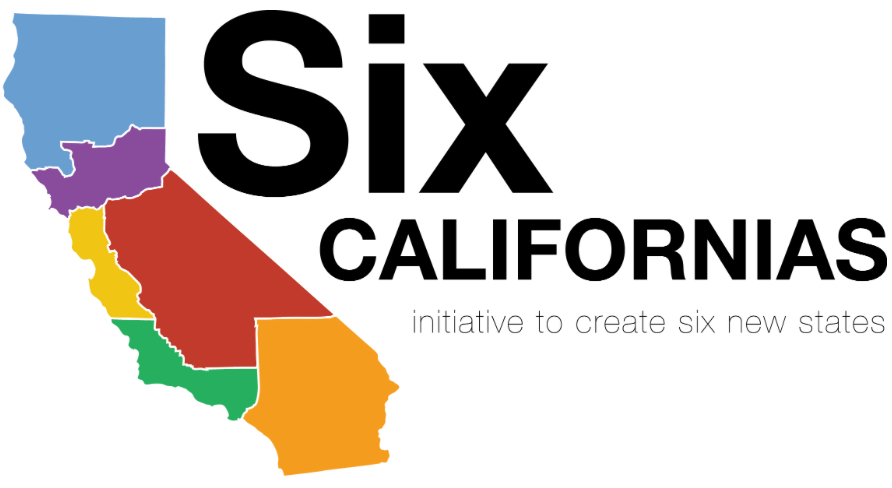
Hoping for success where history once failed, Draper’s motion calls for a six-way divide of the state. From North to South, the states would be as follows: Jefferson, North California, Central California, Silicon Valley (Draper’s native land), West California, and South California. To guarantee the success of implementation, Draper proposes the establishment of a 24-member Board of Commissioners who would be responsible for dispersing California’s funds and property among the newly created states within two years. And finally, in striving for a favorable outcome, Draper deems himself the “appointed ‘agent of the State of California’” in the process of defending the initiative against legal backlashes.
Because the proposal is so radical, it faces strong resistance by contenders even in its earliest stages of development. First and foremost, many argue this is a clear violation of
Article 4, Section 3 of the U.S. Constitution, which states, “No new State shall be formed or erected within the Jurisdiction of any other State”. The counterargument, though, is to point to the secessions of West Virginia and Nevada from Confederate states during the Civil War.
Allowing that this is legally plausible, then, the argument becomes whether it is possible for this severance to occur neatly and fairly. For example, certain legalities exist uniquely under California law, which need to be addressed concerning the transition period. Matters of concern include water rights, distribution of state universities, and the new interstate commerce that would arise out of what is currently state commerce. From the perspective regarding social policy, the question arises: would each individual state be allowed to choose their stance on the legalizations of same sex marriage and marijuana, or would they immediately assume California’s single-state stances? The eastern
border of the state is largely conservative, so the latter could cause a serious setback in actualizing the proposal. In fact, conservatism is a major cause of concern for Californian Democrats. Considering two senators would represent each new territory, this could expand Republican representation beyond its current bounds and, in effect, cause problems gaining Democratic congressional support for the severance. But according to Draper, this hindering political divide is exactly what his proposal warrants against. In an
email he sent to TechCrunch in December, Draper claimed the state is “ungovernable” given its current borders. His solution is to gain what he considers fair representation within in the Senate for all Californians.
Despite Draper’s good intentions, a December poll revealed only 25 percent of California residents support his proposal while 59 percent are in opposition. Expectedly, the majority of his support derives from less populous areas of California who actively
fight against large cities like Los Angeles and San Francisco gaining political domination despite little geographic representation. While the proposal addresses this issue by improving legislative representation, other size concerns aren’t being addressed. Because the proposal suggests state funds should be dispersed based on population, legislative analysts have predicted the formation of two wealthy states and four poor. The result, then, is the current problem: underrepresentation as a Californian entity for rural areas.
Do the consequences of the proposal outweigh the benefits? Draper certainly doesn’t think so and is devoting his deep pockets to prove it. His six-state petition requires one million signatures in order to even be presented on the upcoming autumn ballot, so promotion of the idea will certainly require his financial backing. Fortunately, his million dollar successes in starting up Hotmail, Skype, and his own venture capitalist firm provide him with the legitimacy required to tackle such a tremendous task. So far, public advocacy is limited to periodic news interviews and a
website currently in beta, but Draper has plans to increase awareness in hopes of convincing his fellow Californians and, in the long run, his fellow Americans that it is best to be united citizens of the 55 states of America.
